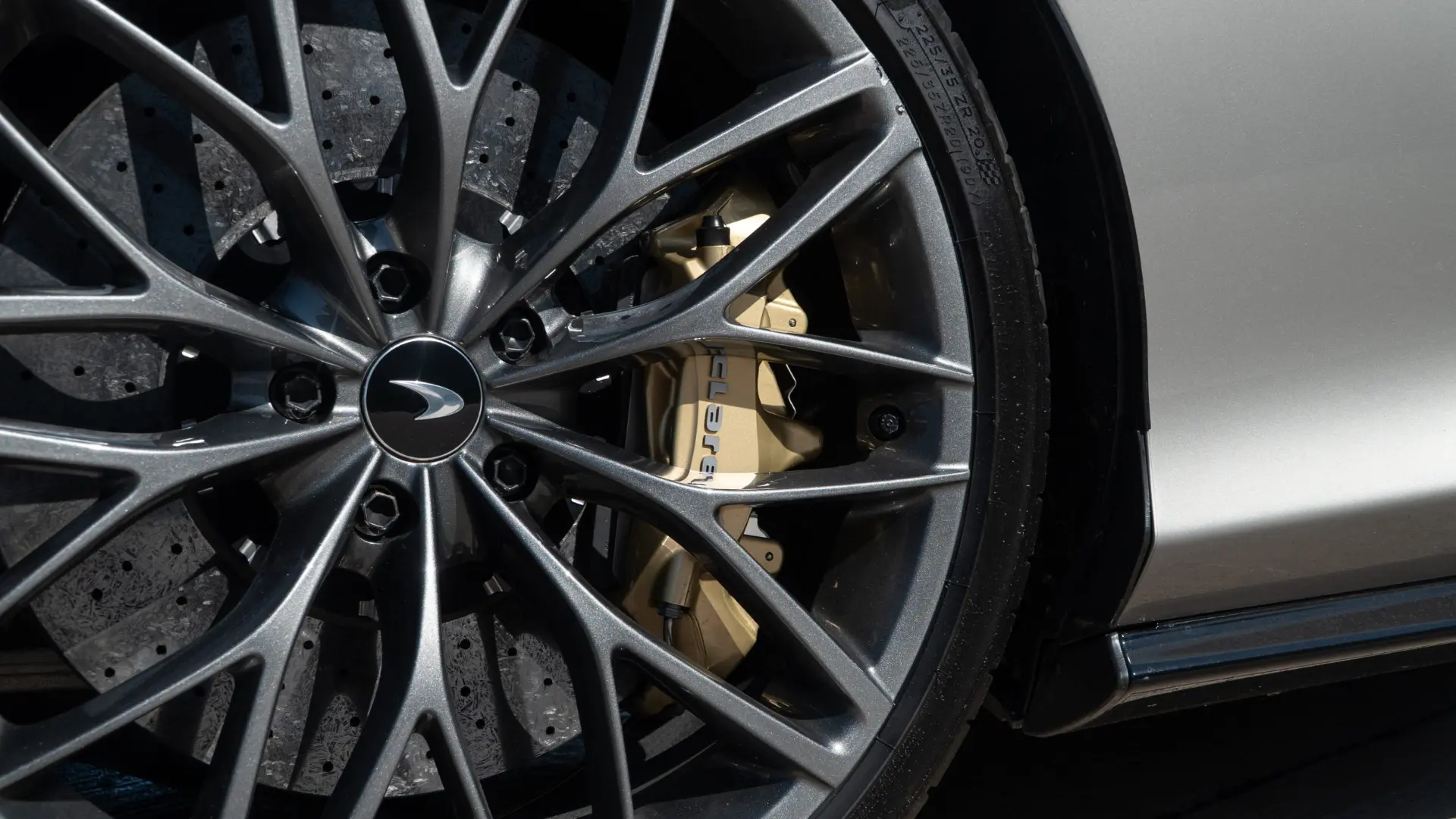
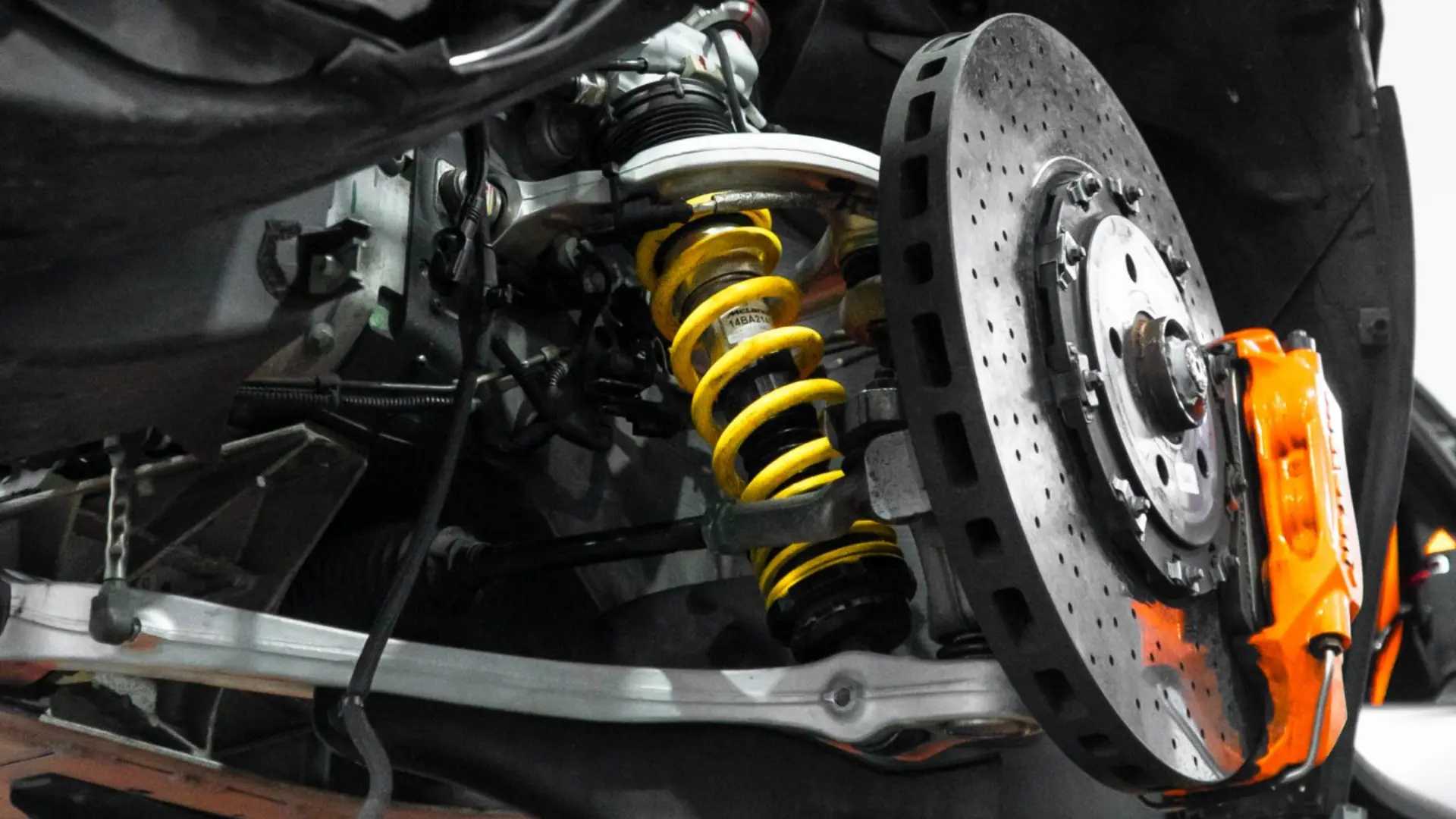
Steel brakes tell you when they are finished. Carbon ceramic discs do not. They lose mass gradually, the pedal gets longer, and the car still stops well enough that nothing feels wrong until a disc is out of tolerance and the replacement cost has quadrupled.
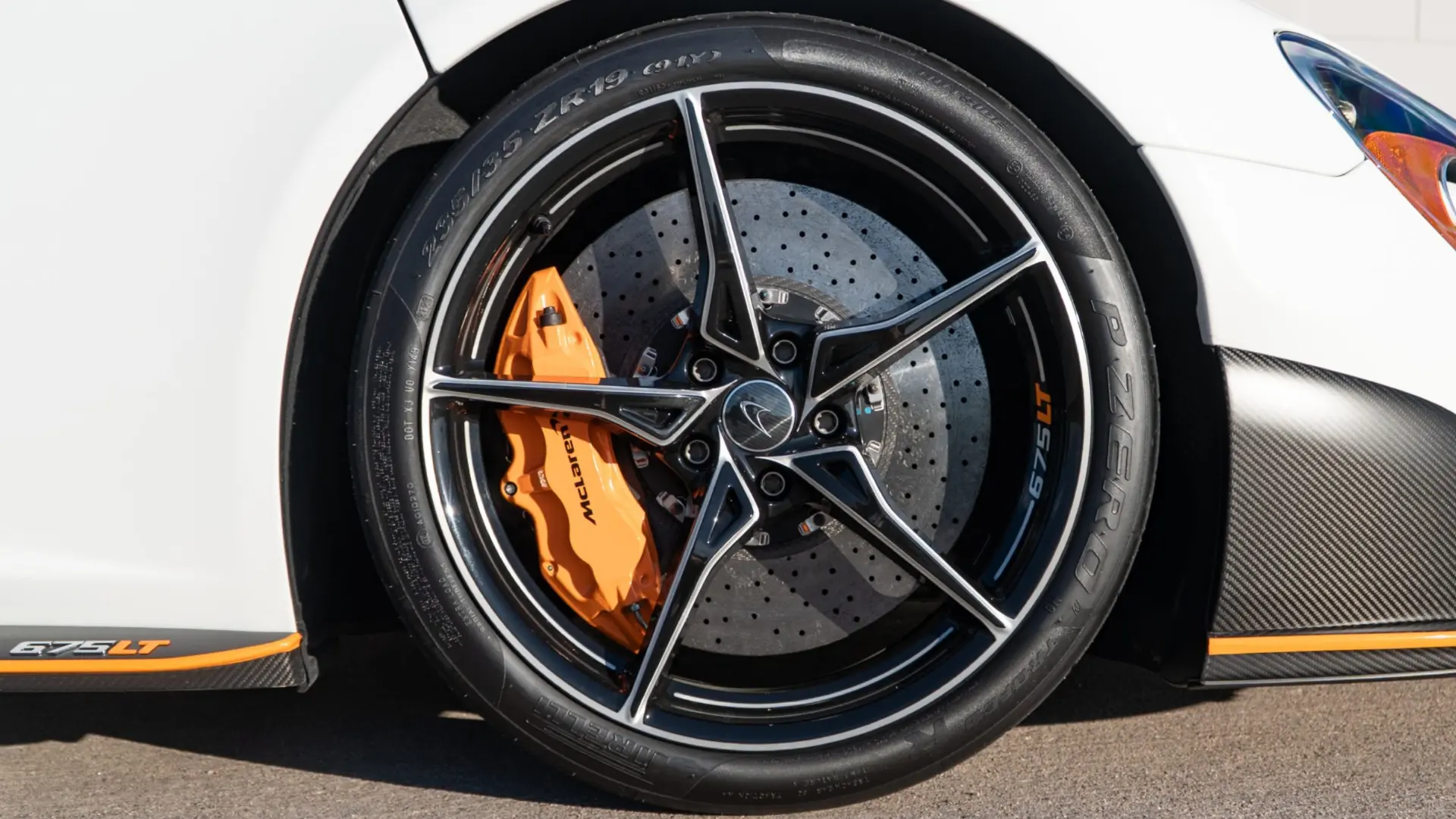
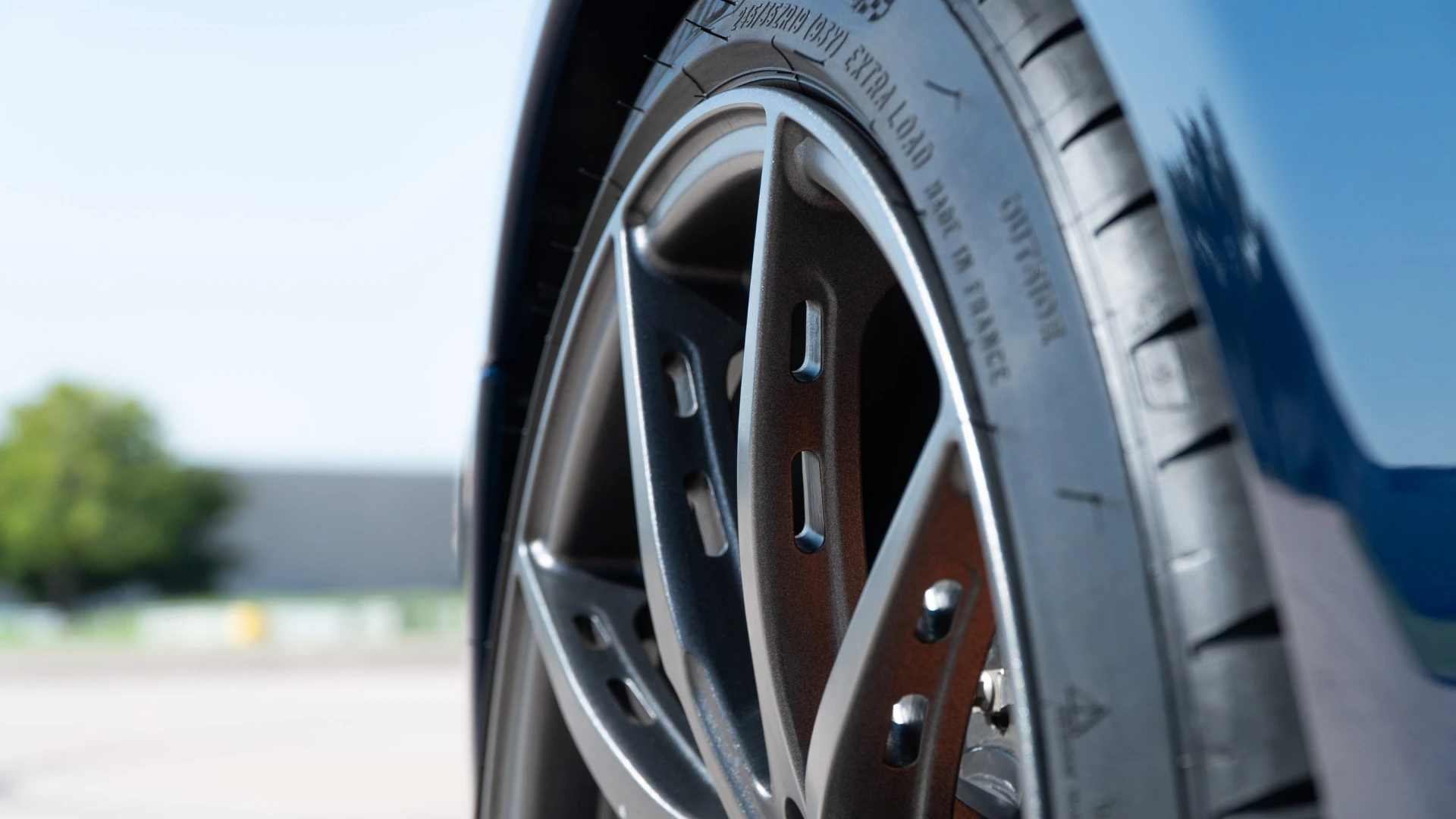
Tires are the other half of the same problem. A McLaren that covers 1,500 miles a year will age out its tires long before it wears them out, and a set with plenty of tread and a six-year-old date code is a worse tire than a half-worn set from last season.
Brake fluid is a two-year item regardless of mileage. It absorbs moisture out of the air, the boiling point drops, and the first place you find out is the one place you do not want to.
What we measure
- Carbon ceramic disc mass against factory minimum, with the disc off the car
- Pad material remaining, front and rear, measured rather than eyeballed
- Brake fluid moisture content and service date
- Tire tread depth, wear pattern and DOT date code on all four
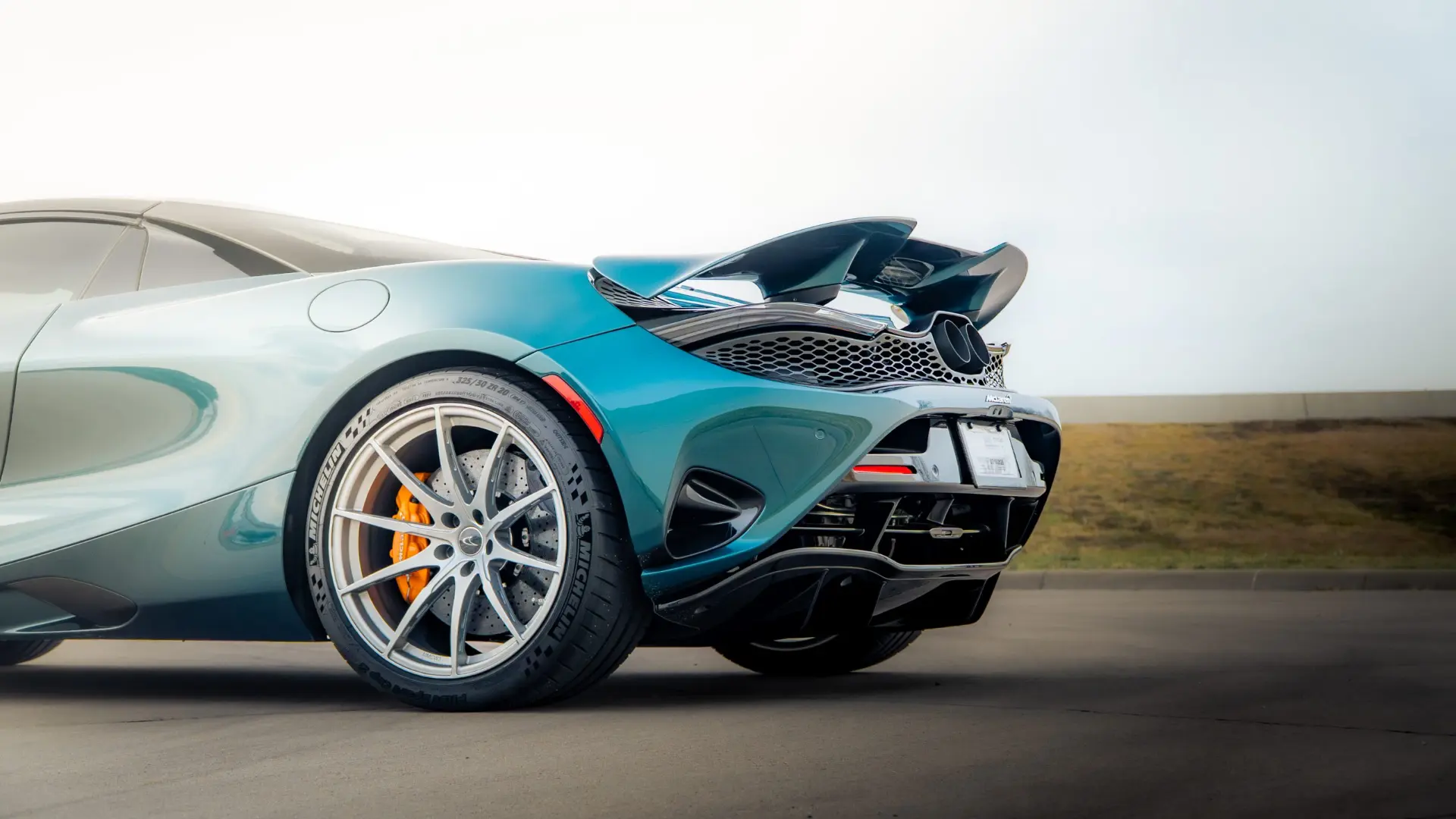
- Wheel condition, bearing play and any brake-related fault codes

 1 month ago