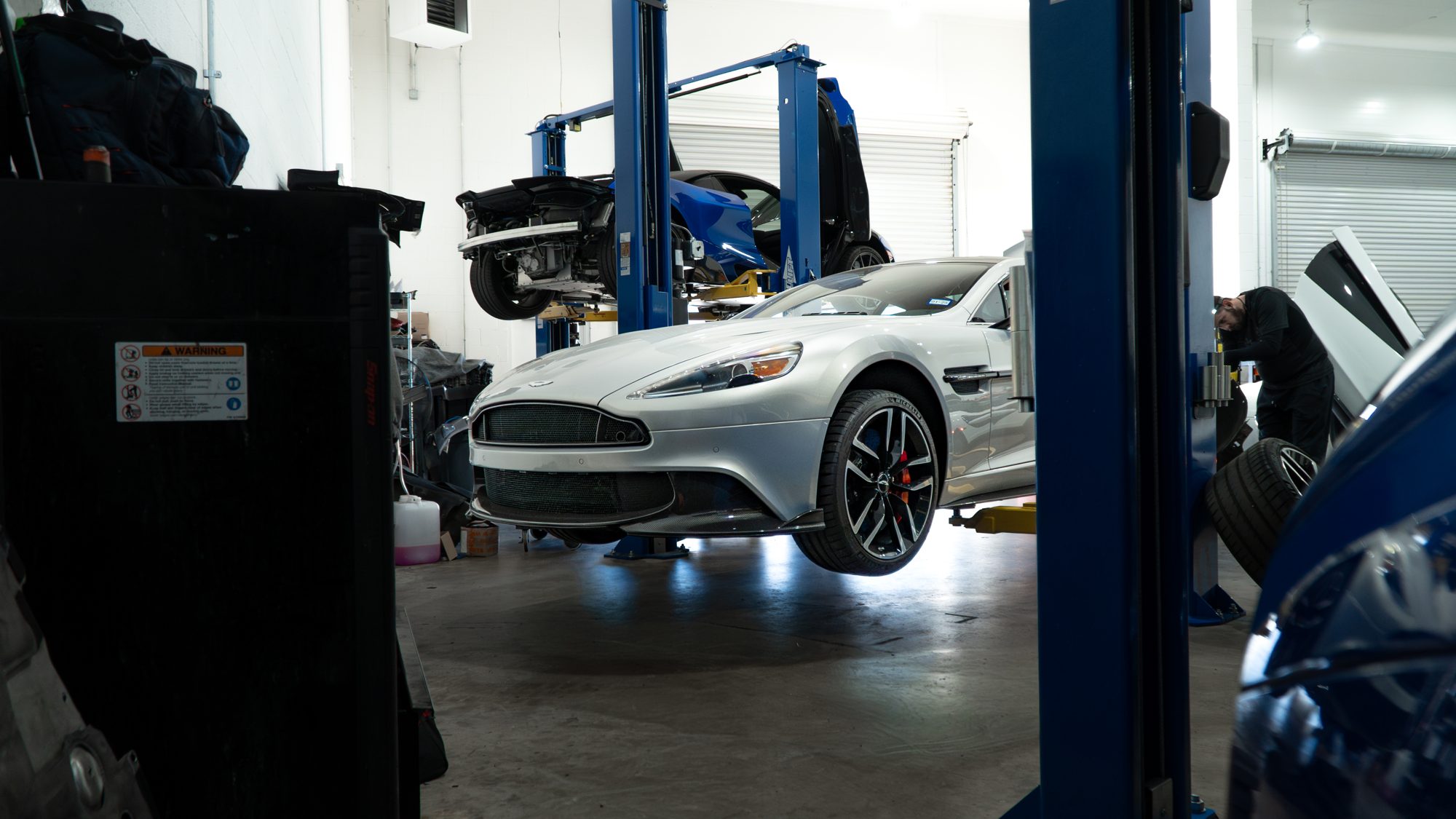
Pressure test and thermal check
The system is pressure tested and the car is run to temperature with live data on the factory tool, so coolant temperature, fan behavior and thermostat operation are all observed rather than assumed.

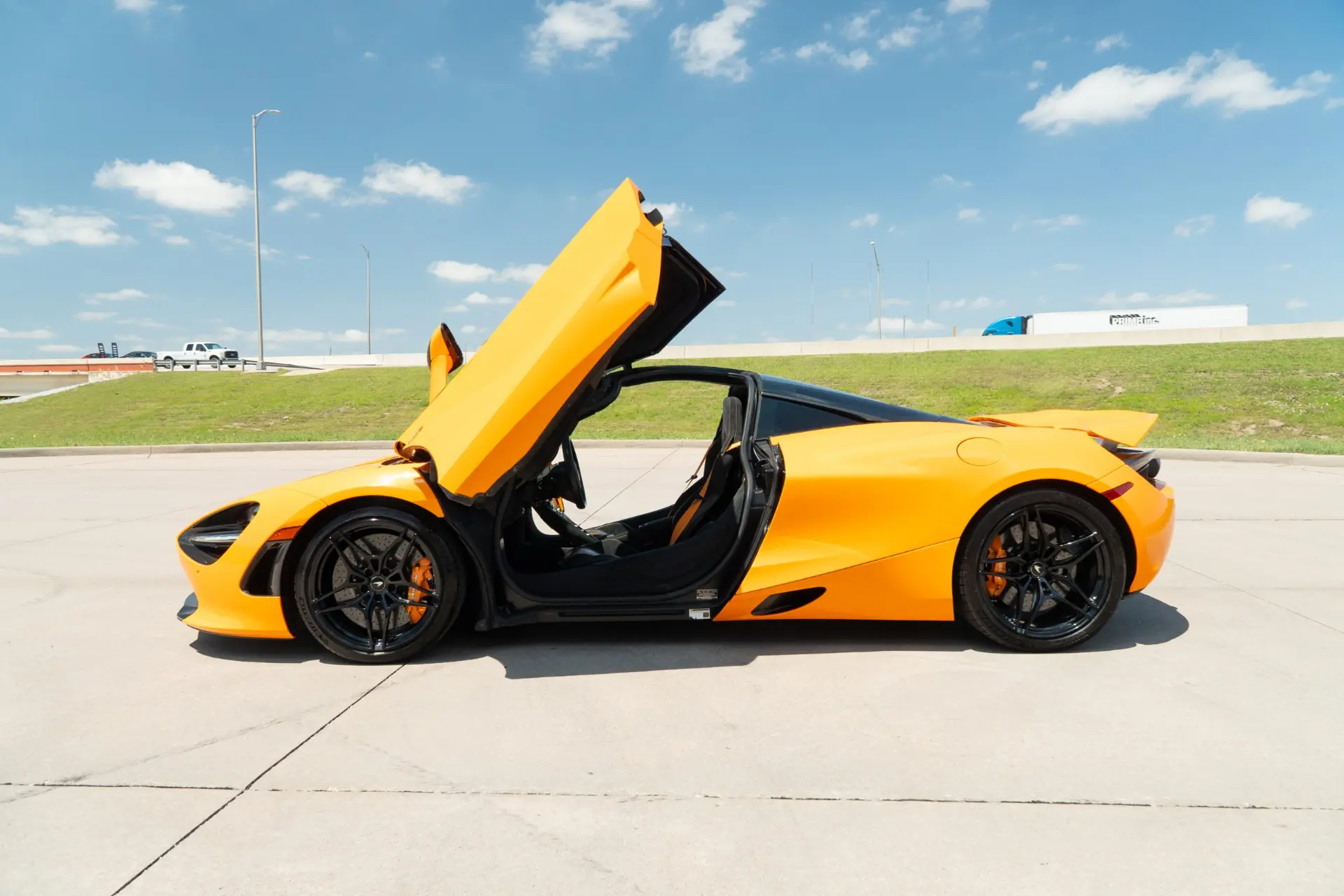
Cooling and thermal · Carrollton, Texas
Texas heat finds every weak hose.
Coolant reservoirs, radiator hoses, oil cooler housings and creeping temperatures, found before they become an engine problem.
The local problem
A mid-engined car with a small radiator area, sitting in traffic in August, works its cooling system harder here than it ever would in England. Faults that a car in a milder climate might carry for years surface in a single Texas summer.
Two of them are common enough to name. Coolant reservoirs crack on the 570S, usually along a seam, and they weep before they fail. Radiator hoses rub through where they pass close to a bracket, which looks like nothing until it is a roadside stop.
Creeping coolant temperature is the symptom owners most often wait on. By the time the gauge moves the system has already lost either coolant or flow, and the difference between catching that and not is the difference between a hose and a head.
The work
Cooling faults are pressure faults. The system is tested cold and hot, because plenty of leaks only appear once everything has expanded.
The system is pressure tested and the car is run to temperature with live data on the factory tool, so coolant temperature, fan behavior and thermostat operation are all observed rather than assumed.
Coolant reservoirs, radiator hoses, oil cooler housings and the unions between them, inspected with the car up and photographed. Where a hose has rubbed, the cause of the rub is corrected as well as the hose replaced.
Radiator cores get packed with road debris in a car with low, forward-facing intakes. Cores are inspected and cleaned, fan operation is tested through its full range, and damaged cores are quoted honestly rather than patched.
Where we look first depends on the car in front of us.
Under heat
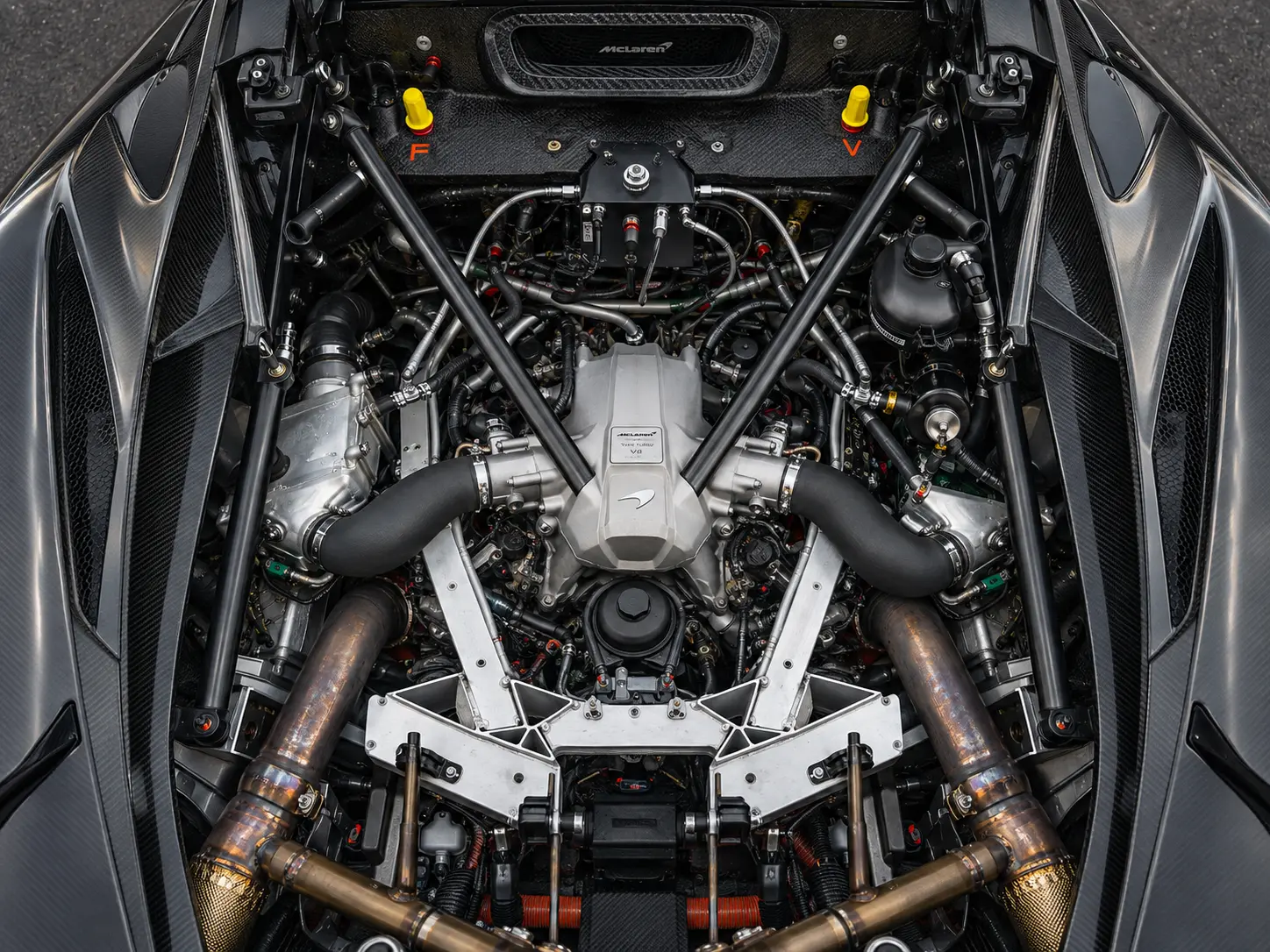
Reservoirs, hoses and radiators inspected in the bay, where 570S coolant systems usually give themselves away.
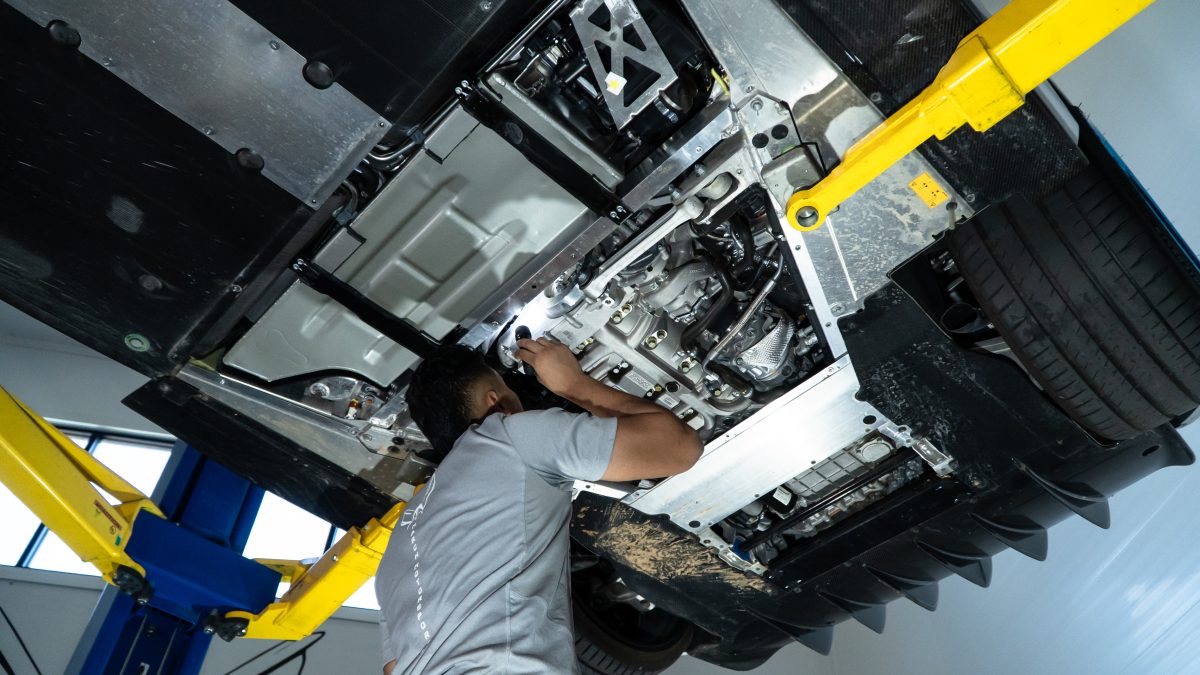
Cooling runs checked from beneath for chafe and impact damage the bay never shows.
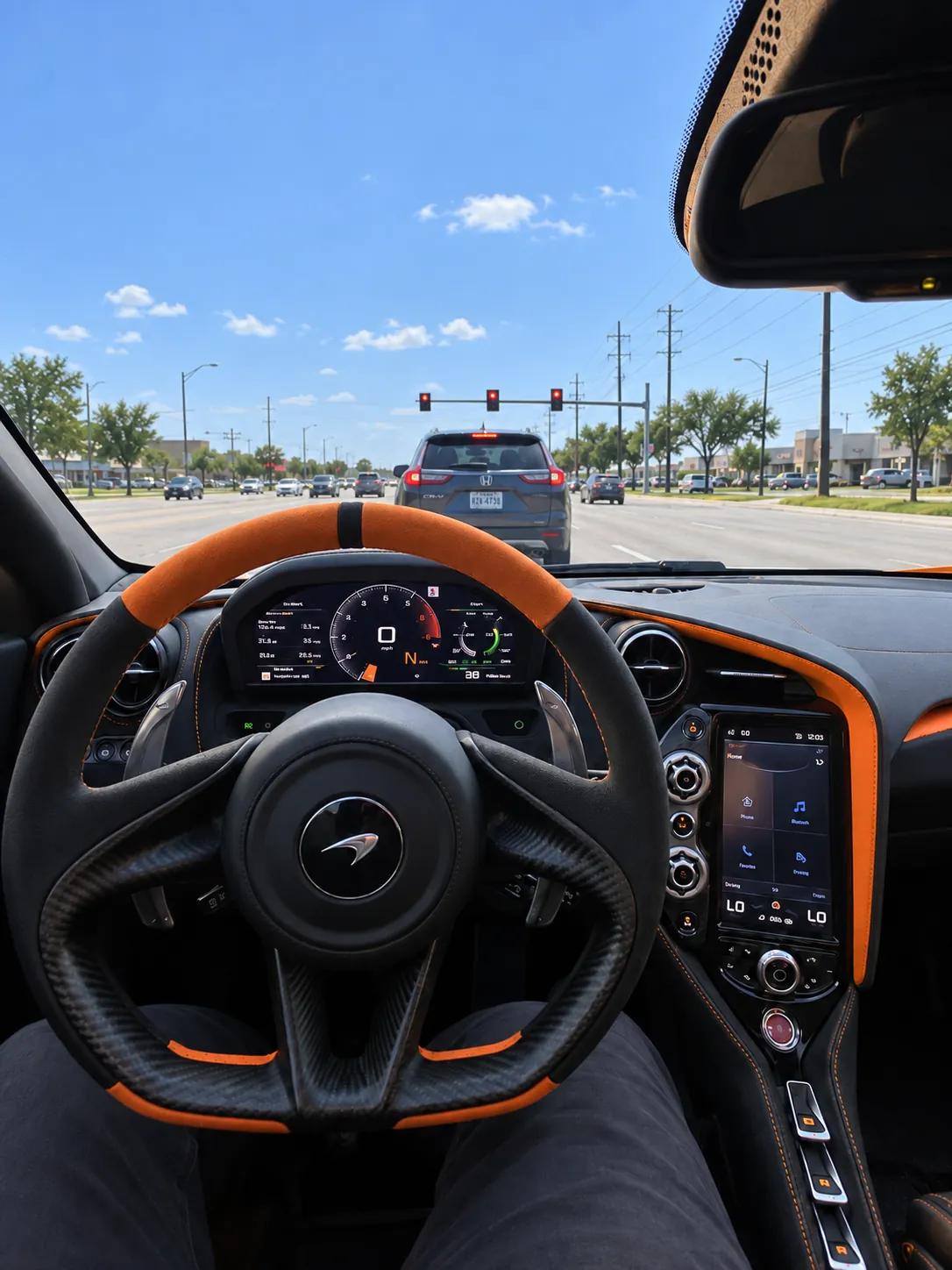
Warm-up, load and hot idle watched live on the road, because temperature faults hide until the car is worked.
How the job runs
Cold and hot testing with live data through a full warm-up cycle.
Photographs of the leak, the cause, and a line-item estimate.
Genuine parts, correct coolant specification, proper fill and bleed.
Run to temperature, re-test, final scan and a written record.
Most cooling repairs are completed in one to three business days depending on part availability.
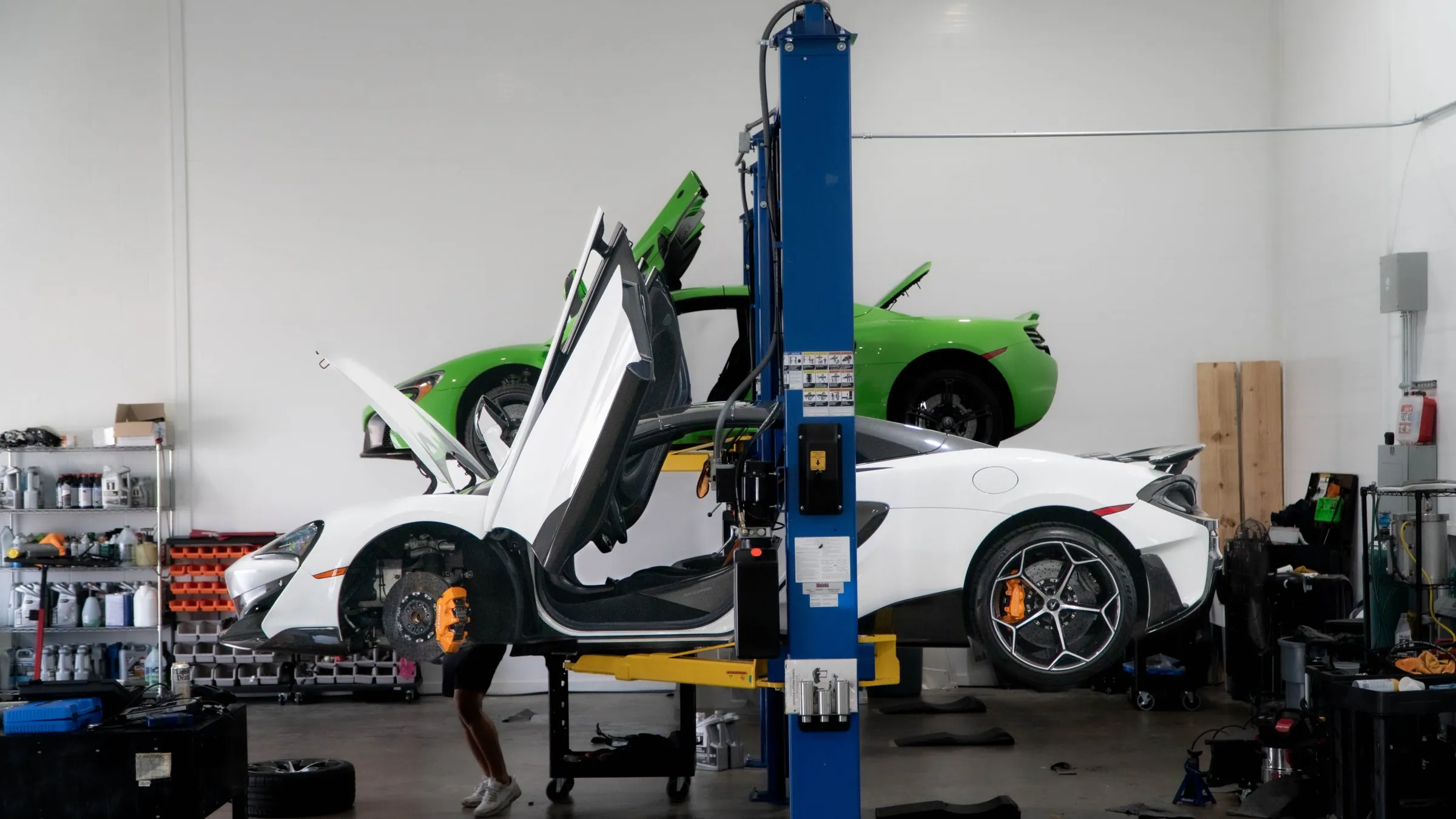
Cooling and thermal
Heat is managed here, not feared.
Where we work
Ten minutes off the President George Bush Turnpike, with collection and return across Dallas, Plano, Frisco and Southlake.
Stop driving it and call us. An overheating McLaren driven a few extra miles is a materially different bill from one that was recovered.
A pressure test and thermal check before June is one of the cheapest pieces of preventative work you can do to one of these cars in Texas.
Why March Motorsports
We have seen these specific failures on these specific cars in this specific climate, repeatedly. That is why the inspection starts where the faults actually are instead of working through a generic checklist.
And we fix the cause of a rubbed hose, not just the hose.
The 570S reservoir and the rubbed hose are known ground, not a discovery.
Leaks that only appear at temperature are found, not missed.
Where something wore through, the reason it wore through is corrected too.
Areas we serve
Our Carrollton workshop serves owners throughout Dallas-Fort Worth, with collection and delivery available across the Metroplex and enclosed transport arranged statewide.
Explore all service areasWhat owners say
 1 month ago
Recently dropped a McLaren 600LT off for a PPI. Dalton and the team were super helpful. They know these cars well and identified issues I don't believe another shop would have caught.
1 month agoDalton at March Motorsports is the real deal. He answered every question honestly, never pushed me, and went out of his way to help. Their inspection work is thorough and transparent.
1 month agoMcLaren has been my dream car to own and March Motorsports helped me from start to finish. I recently purchased a McLaren 720S from March Motorsports and it has been an amazing experience.
2 months agoDalton and the team have taken excellent care of my 2019 McLaren 570S for 2 years, from regular service to complex repairs, exhaust and ECU performance upgrades.
2 months agoDalton helped me out tremendously. Couldn't have asked for a better experience. He directed me the right way on a McLaren I was looking to buy.
2 months agoPerformed 6 year service on my 600LT Spider. 5/5.
2 months agoAll work was performed, as promised, to their and my exacting specifications. Dalton was very responsive throughout the whole process.
2 months agoExceptional work, honest communication, and true expertise. If you own a McLaren, this is the kind of mechanic you want in your corner.
1 month agoRecently dropped a McLaren 600LT off for a PPI. Dalton and the team were super helpful. They know these cars well and identified issues I don't believe another shop would have caught.
1 month agoDalton at March Motorsports is the real deal. He answered every question honestly, never pushed me, and went out of his way to help. Their inspection work is thorough and transparent.
1 month agoMcLaren has been my dream car to own and March Motorsports helped me from start to finish. I recently purchased a McLaren 720S from March Motorsports and it has been an amazing experience.
2 months agoDalton and the team have taken excellent care of my 2019 McLaren 570S for 2 years, from regular service to complex repairs, exhaust and ECU performance upgrades.
2 months agoDalton helped me out tremendously. Couldn't have asked for a better experience. He directed me the right way on a McLaren I was looking to buy.
2 months agoPerformed 6 year service on my 600LT Spider. 5/5.
2 months agoAll work was performed, as promised, to their and my exacting specifications. Dalton was very responsive throughout the whole process.
2 months agoExceptional work, honest communication, and true expertise. If you own a McLaren, this is the kind of mechanic you want in your corner.
Book it
If temperatures are climbing, tell us how far you have driven it since. That changes what we check first.
Questions
Heat cycling works the plastic along the molded seam, and Texas summers accelerate it. On the 570S in particular it is common enough that we check it on every car that comes in with a coolant complaint.
No. Creeping temperature means the system has already lost coolant or flow, and the additional damage from driving on is far more expensive than recovery.
We assess it against age and condition at every scheduled service rather than treating it as a fixed mileage item, and we test it rather than guessing.
Not necessarily; these cars run fans after shutdown by design. Running unusually long or unusually hard is worth a thermal check.
Yes. The car is run to temperature with live data, which is the only reliable way to catch a leak that seals itself cold.
On a low car with forward-facing intakes, yes. Cores collect road debris and lose efficiency long before they look blocked.
Considerably. Tell us if the car sees track days, because it changes both what we check and what we recommend.
Yes, factory specification coolant and genuine components, with part numbers recorded on your invoice.