Fault reading and pressure testing
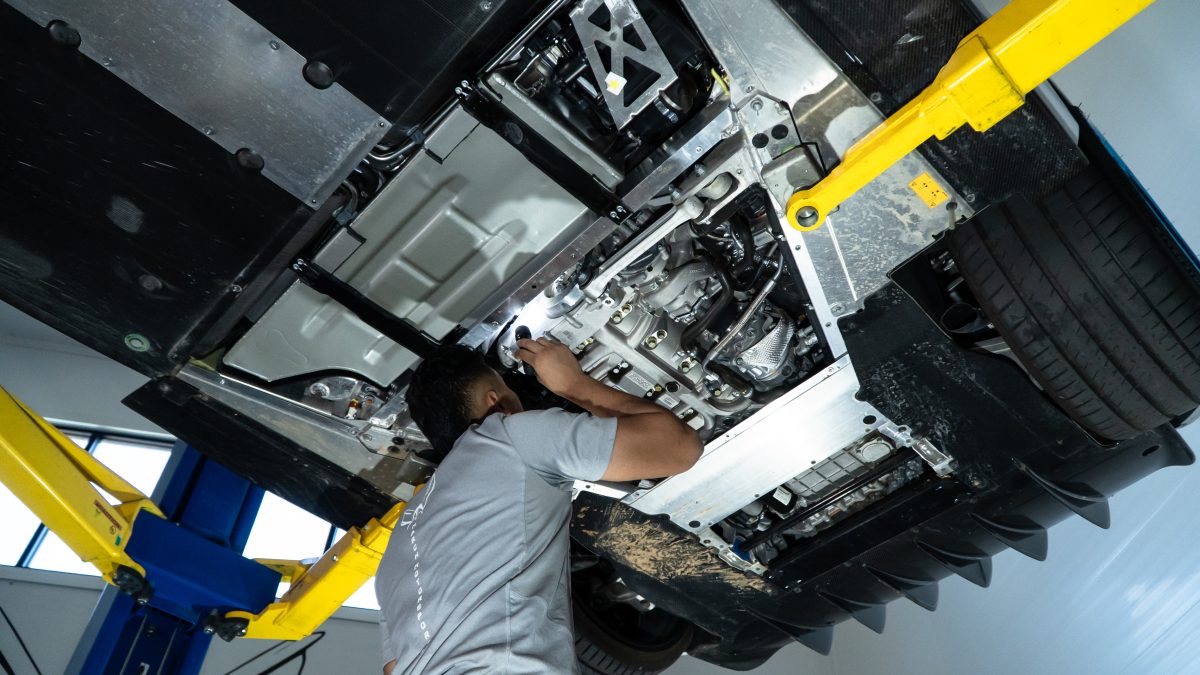
The chassis modules are read on MDS, live data is logged, and the system is pressure tested to find where it is losing its integrity rather than replacing whichever corner looks worst.


Suspension and hydraulics · Carrollton, Texas
Ride height is a specification, not a preference.
Hydraulic bleeds, damper faults, seepage and ride height, diagnosed on the factory tool and set to the numbers McLaren published for your car.
The system under the car
McLaren's hydraulically linked suspension does the job anti-roll bars do on other cars, which is why these cars ride the way they do. It also means a fault in the hydraulics changes how the car behaves rather than simply making it uncomfortable.
Seepage is the common starting point. A damper that has begun to weep will still work, the car will still drive, and the system will quietly lose the pressure it needs to control body movement properly. The warning message usually arrives well after the leak did.
Ride height is not a matter of taste on these cars. It is a specification, it interacts with the aerodynamics and the alignment, and it has to be set with the car at the correct weight and temperature to mean anything.
The work
The system is pressurised and interconnected, so the sequence of the work matters as much as the parts.
The chassis modules are read on MDS, live data is logged, and the system is pressure tested to find where it is losing its integrity rather than replacing whichever corner looks worst.
Air in a hydraulically linked system shows up as inconsistent body control long before it shows up as a message. The system is bled to the factory procedure, in the factory order, and verified with the car under load.
Weeping dampers and tired accumulators are replaced with genuine parts, and the surrounding lines and unions are inspected while the car is apart. Photographs of every leak go in the file so you can see what you are paying for.
Once the hydraulics are correct, the geometry can be set.
Corner by corner
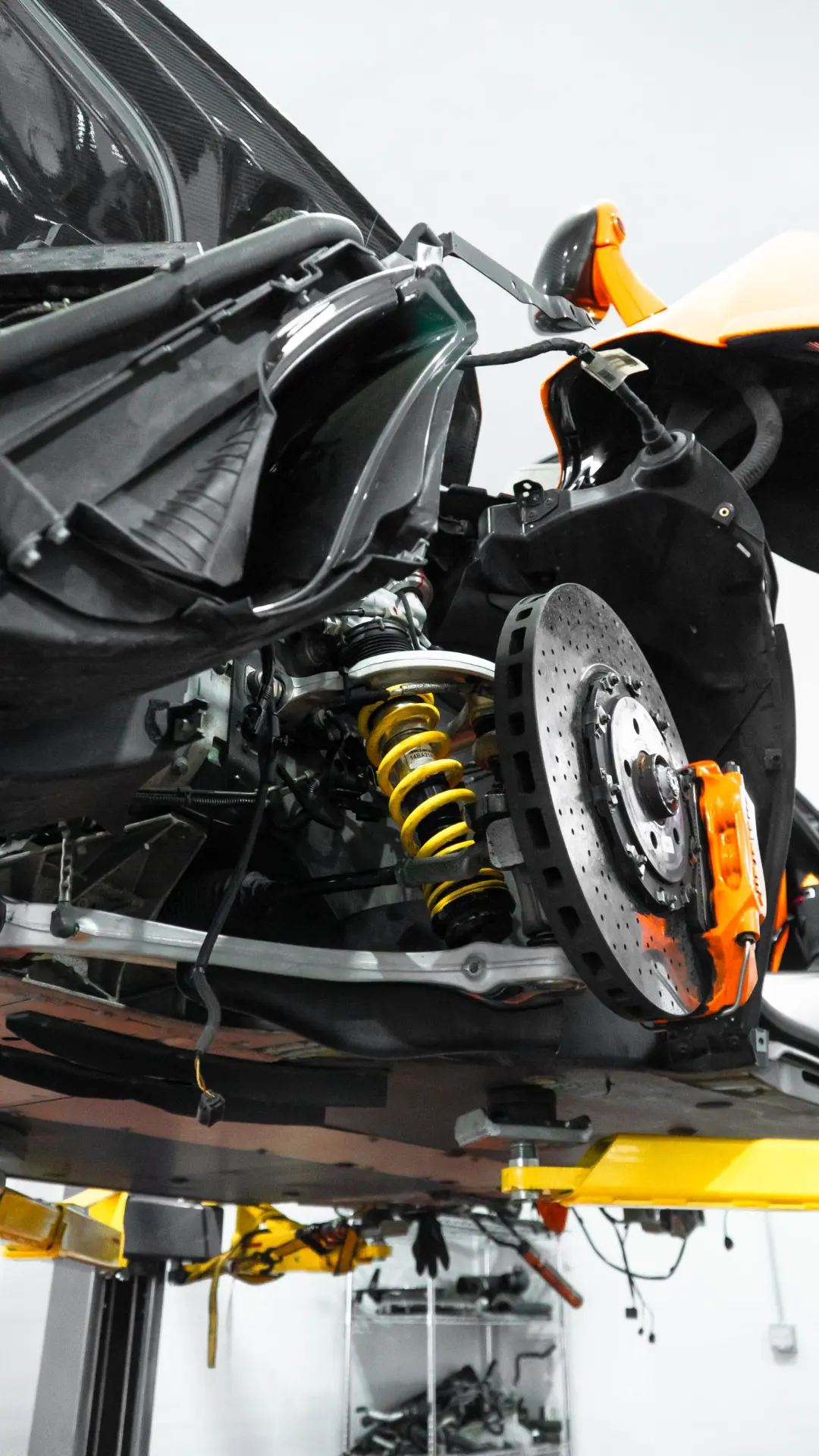
Coilover condition, ride height and damping checked corner by corner against factory settings.
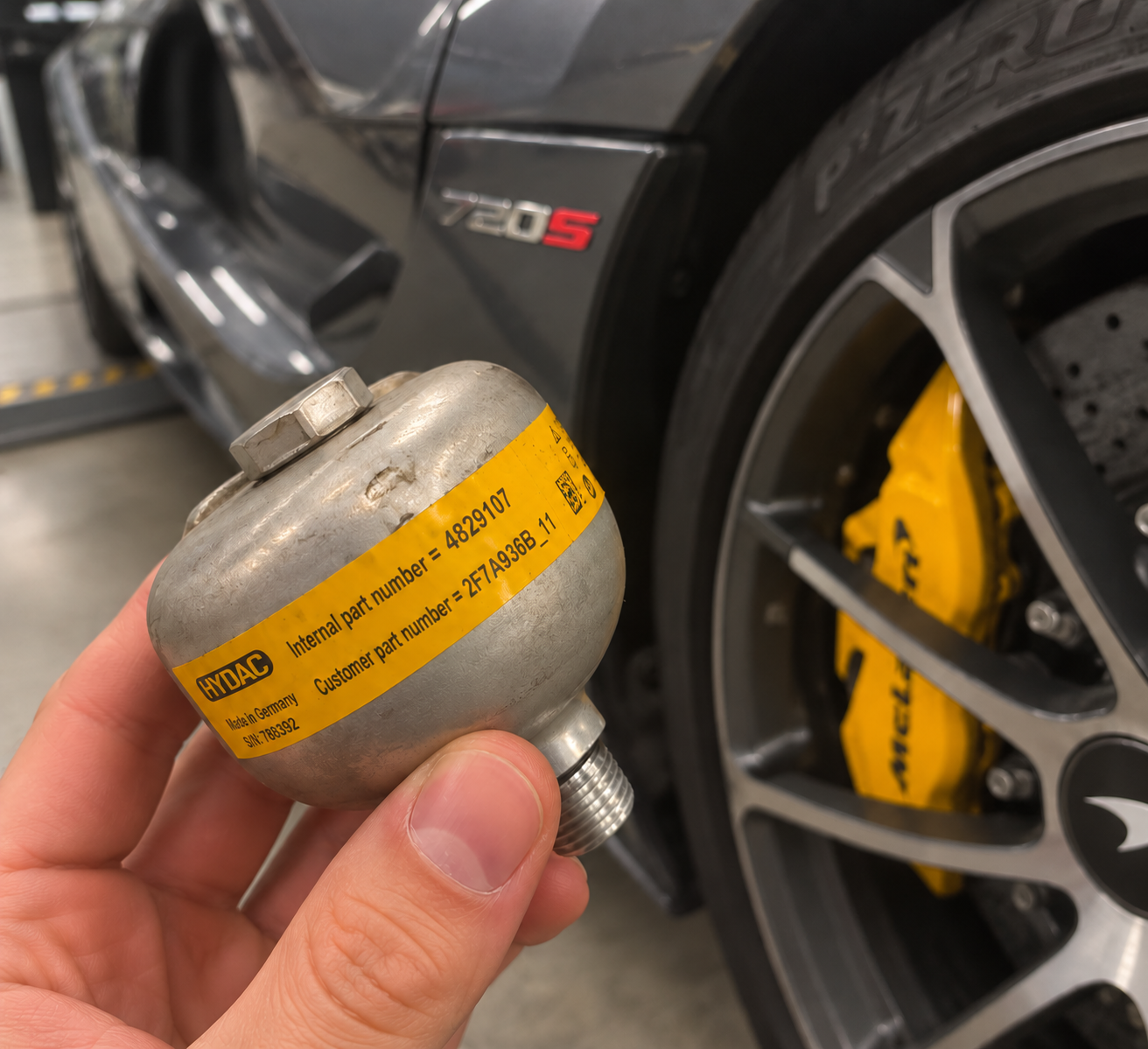
Lines, accumulators and the hydraulic pump inspected for seepage and correct bleed before any unit is condemned.
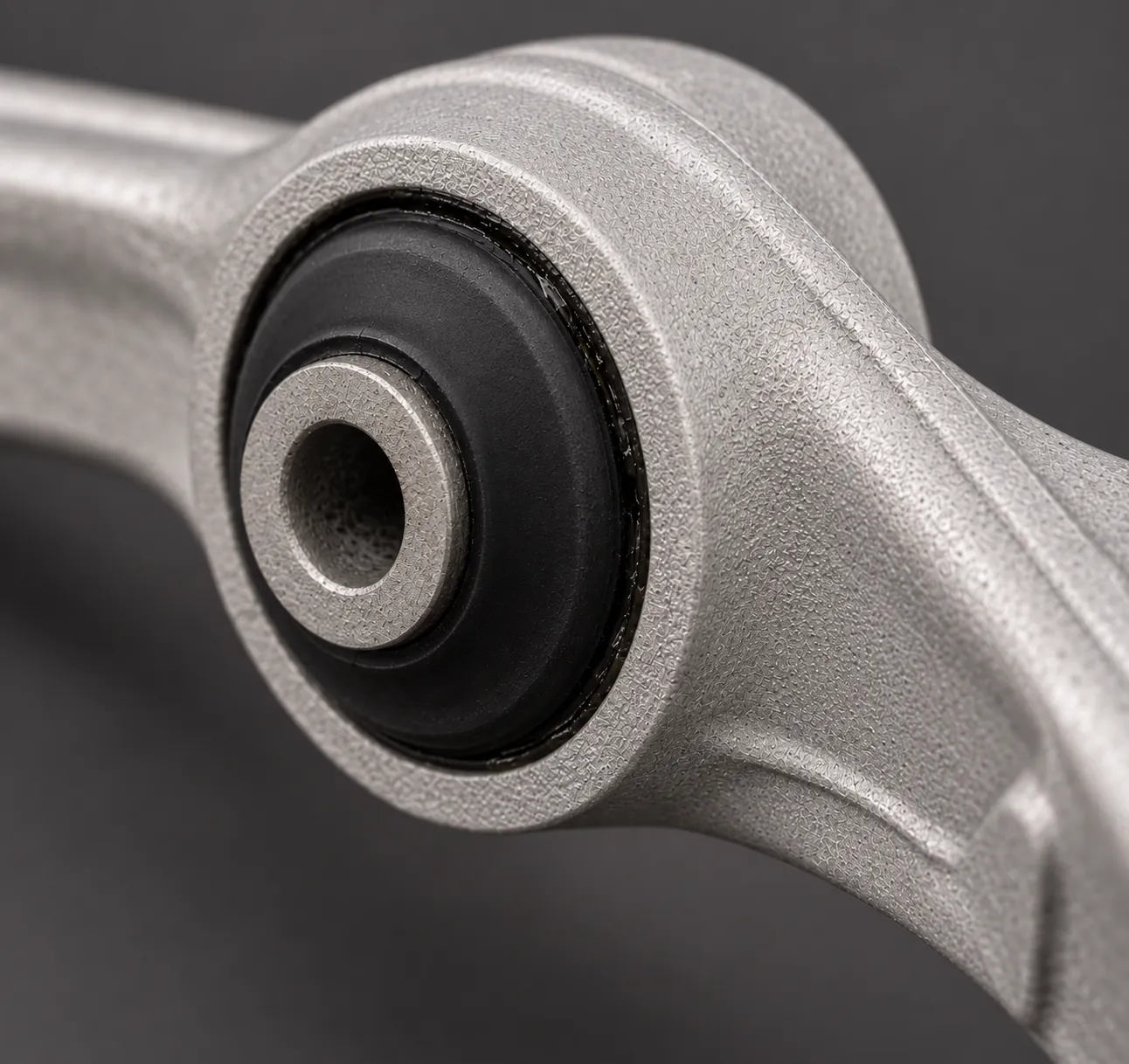
Ball joints, bushings and drop links inspected for play, with anything marginal photographed and noted.
How the job runs
Chassis fault read, road test, and the car up for a seepage inspection.
Photographs of each leak or fault with a line-item estimate.
Genuine parts, factory bleed procedure, factory torque values.
Ride height and alignment set, road tested, final scan recorded.
Bleeds and single-corner work are usually one to two days; full hydraulic work with alignment runs longer.
Suspension and hydraulics
Ride height, pressure and poise, set to spec.
Where we work
The alignment and ride height work happens here, on our own equipment, with the figures recorded against your VIN.
If the lift system is slow or will not hold, say so when you book. It is the fault owners live with longest and one of the more satisfying ones to fix.
Corner balancing and a track-appropriate setup are available for owners running the car in anger, and we record the road setup so it can be put back.
Why March Motorsports
A hydraulically linked suspension bled out of sequence behaves worse than one that was left alone. There is a procedure, it is not intuitive, and it is where general shops come unstuck.
We do it to the factory sequence and we verify it with the car loaded, not on a lift with the wheels hanging.
Done in the correct order and verified under load, not by feel.
You see the seepage before you pay for the part that fixes it.
Ride height and alignment figures filed against your VIN for next time.
Areas we serve
Our Carrollton workshop serves owners throughout Dallas-Fort Worth, with collection and delivery available across the Metroplex and enclosed transport arranged statewide.
Explore all service areasWhat owners say
 1 month ago
Recently dropped a McLaren 600LT off for a PPI. Dalton and the team were super helpful. They know these cars well and identified issues I don't believe another shop would have caught.
1 month agoDalton at March Motorsports is the real deal. He answered every question honestly, never pushed me, and went out of his way to help. Their inspection work is thorough and transparent.
1 month agoMcLaren has been my dream car to own and March Motorsports helped me from start to finish. I recently purchased a McLaren 720S from March Motorsports and it has been an amazing experience.
2 months agoDalton and the team have taken excellent care of my 2019 McLaren 570S for 2 years, from regular service to complex repairs, exhaust and ECU performance upgrades.
2 months agoDalton helped me out tremendously. Couldn't have asked for a better experience. He directed me the right way on a McLaren I was looking to buy.
2 months agoPerformed 6 year service on my 600LT Spider. 5/5.
2 months agoAll work was performed, as promised, to their and my exacting specifications. Dalton was very responsive throughout the whole process.
2 months agoExceptional work, honest communication, and true expertise. If you own a McLaren, this is the kind of mechanic you want in your corner.
1 month agoRecently dropped a McLaren 600LT off for a PPI. Dalton and the team were super helpful. They know these cars well and identified issues I don't believe another shop would have caught.
1 month agoDalton at March Motorsports is the real deal. He answered every question honestly, never pushed me, and went out of his way to help. Their inspection work is thorough and transparent.
1 month agoMcLaren has been my dream car to own and March Motorsports helped me from start to finish. I recently purchased a McLaren 720S from March Motorsports and it has been an amazing experience.
2 months agoDalton and the team have taken excellent care of my 2019 McLaren 570S for 2 years, from regular service to complex repairs, exhaust and ECU performance upgrades.
2 months agoDalton helped me out tremendously. Couldn't have asked for a better experience. He directed me the right way on a McLaren I was looking to buy.
2 months agoPerformed 6 year service on my 600LT Spider. 5/5.
2 months agoAll work was performed, as promised, to their and my exacting specifications. Dalton was very responsive throughout the whole process.
2 months agoExceptional work, honest communication, and true expertise. If you own a McLaren, this is the kind of mechanic you want in your corner.
Book it
Tell us what the car is doing and whether a message has appeared. Photographs of any visible leak help us quote before you arrive.
Questions
Usually a hydraulic leak or a failing accumulator on that corner. The system is interconnected, so the fix starts with a pressure test rather than replacing the part nearest the symptom.
Anything from air in the system to a failed damper or sensor. The chassis modules are read on the factory tool first, because the message names the circuit, not the cause.
It is not an emergency, but it does not stop on its own, and body control degrades before any message appears. It is worth fixing at the next service rather than the one after.
Yes, measured with the car at correct weight and set to the published figures for your model, with the numbers recorded against your VIN.
Yes. We will also record the road setup first, so the car can be returned to it afterwards.
Almost always. Geometry moves whenever suspension components come apart, and leaving it unchecked shows up as tire wear within a few thousand miles.
Often, yes, though it can also be the pump or a sensor. It is a straightforward thing to diagnose properly and an irritating one to live with.
Yes, with part numbers recorded on the invoice and the old parts available for you to see.